Eight Dollars and a Dream: The Strange Rise of America's Favorite Deposit Button
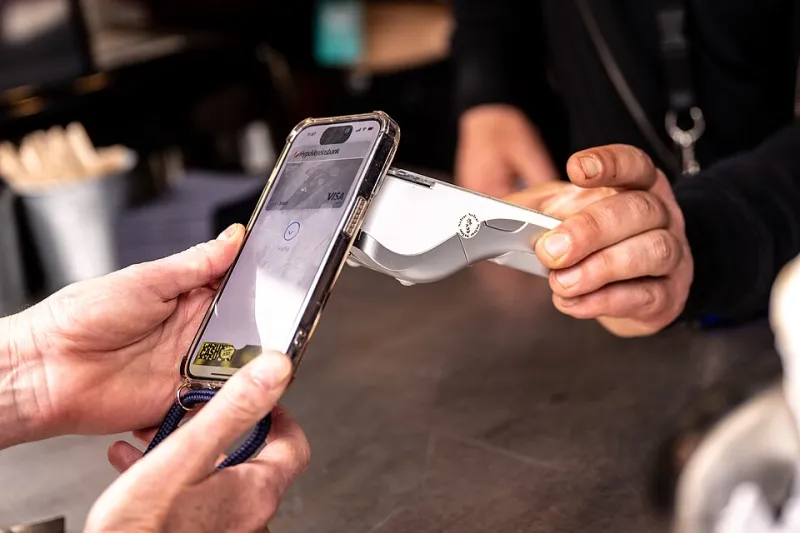
Photo: Stefanie Loos / re:publica, CC BY-SA 2.0, via Wikimedia Commons
Somewhere between the $5 minimum and the $20 'most popular' badge on your casino app's cashier screen sits a quieter option: $8.88. Nobody elected it. Nobody campaigned for it. And yet, ask around the mobile gaming world and you'll hear the same thing over and over — it's one of the most-tapped amounts in American checkout flows.
How did a number that most of us can't explain end up funding so many spins? We spent weeks asking players, payment processors, and the folks who design these cashier screens. The answer is part superstition, part behavioral science, and part very deliberate product design.
The Number That Traveled
Eight has never carried much weight in American numerology. Four-leaf clovers, rabbit's feet, lucky pennies — sure. But in Chinese-speaking cultures, eight is the superstar. The word for eight sounds like the word for prosperity, which is why license plates, phone numbers, and apartment floors with eights command real money in markets from Hong Kong to Singapore. A triple eight is the jackpot of jackpots.
US casino apps didn't invent the association — they imported it. Sweepstakes casinos and social gaming platforms, many founded by teams with roots in Asian gaming markets, brought the number with them. It showed up in brand names, bonus codes, and eventually, the deposit menu. From there it spread. Once a few apps put $8.88 on the screen, players started recognizing it, and recognition turned into habit.
"I honestly don't remember when I first picked it," says Dana, a 34-year-old medical biller in Ohio who plays slots on her commute. "It was just there one day, and it felt right. Now if I deposit anything else, the session feels off. Which I know is ridiculous."
Dana isn't ridiculous. She's predictable — in the way behavioral economists find genuinely fascinating.
What the Payment People See
Payment processors who work with social and sweepstakes casinos see the pattern in the data. Deposits cluster hard around round numbers — $10, $20, $50 — because that's how humans naturally budget. But $8.88 (and its cousin, $18.88) punches way above its weight for a number with no natural anchor in American life.
One processor we spoke with, who asked not to be named because his clients include several major apps, put it plainly: "When a cashier screen offers $8.88, somewhere between eight and fifteen percent of transactions land on it. That's a number that shouldn't exist. Twenty-dollar deposits exist because twenties exist. $8.88 exists because somebody wanted it to."
The economics are subtle but real. An $8.88 deposit is small enough to clear the mental 'this is just entertainment' bar, but big enough to unlock most first-purchase bonuses. It's the sweet spot where a player feels thrifty and the app still books a conversion. Some marketers call it the "no-regret amount."
Designed to Feel Chosen
Here's where it gets interesting. Multiple app marketers we interviewed admitted that lucky-number presets are tested the same way button colors and notification timings are tested — relentlessly.
"We A/B test everything in the cashier," one product manager at a mid-size social casino told us. "And the eight-based options consistently hold their own against bigger amounts. Players describe them as 'fun' in feedback sessions. Nobody calls a $25 deposit fun."
The psychology at work has names. There's the anchoring effect, where the numbers around an option shape how it feels — $8.88 looks tiny next to a $50 button. There's the appeal of specificity: a precise number feels more considered than a round one, even when it's just as premeditated. And there's plain old superstition, which research consistently shows spikes in situations involving chance. A deposit into a slots app is about as chance-adjacent as a purchase gets.
Layer on the lucky-eight branding, and you've got a button that lets players feel like they're making a clever, culturally savvy, slightly lucky choice. Whether they're actually just tapping a well-placed preset is a question most people don't stop to ask.
The Players Aren't Naive — They're Playing Along
The twist in our reporting is that most players we talked to aren't fooled. They know $8.88 is a marketing artifact. They tap it anyway.
"It's like ordering the lucky number at a Chinese restaurant," laughs Marcus, a 41-year-old warehouse supervisor in Georgia. "Technically it's just eight dollars and eighty-eight cents. But it costs the same as eight dollars, and I get the little bonus of it meaning something. That's a fine trade."
That's the honest read on the whole phenomenon. The $8.88 deposit is a tiny piece of theater that both sides agree to perform. The app gets a conversion at a price point it engineered. The player gets a deposit that feels like a ritual instead of a transaction. In a hobby built entirely on the pleasant fiction that luck can be courted, it might be the most honest dollar amount on the screen.
What to Watch For
None of this means you should avoid the eight — it's your money, and a smaller deposit is usually a smarter deposit. But a few things are worth noticing the next time your cashier screen loads:
- The default is a decision. Pre-selected amounts exist because most people don't change them. If you want to spend a different amount, type it in.
- Bonus thresholds are engineered. If $8.88 unlocks a bonus and $8 doesn't, that gap was built on purpose. Do the math on whether the bonus actually changes your expected value. (Spoiler: it usually doesn't.)
- 'Lucky' amounts can normalize frequency. A small, charming number makes depositing feel lighter. The charm is the point.
The $8.88 button isn't a trick so much as a mirror. It shows us that even in an app store full of algorithms, Americans still want their gambling to have a little magic in it — and that someone, somewhere, is always happy to sell it to us for exactly eight dollars and eighty-eight cents.